Halcyon: Brand System & Campaign
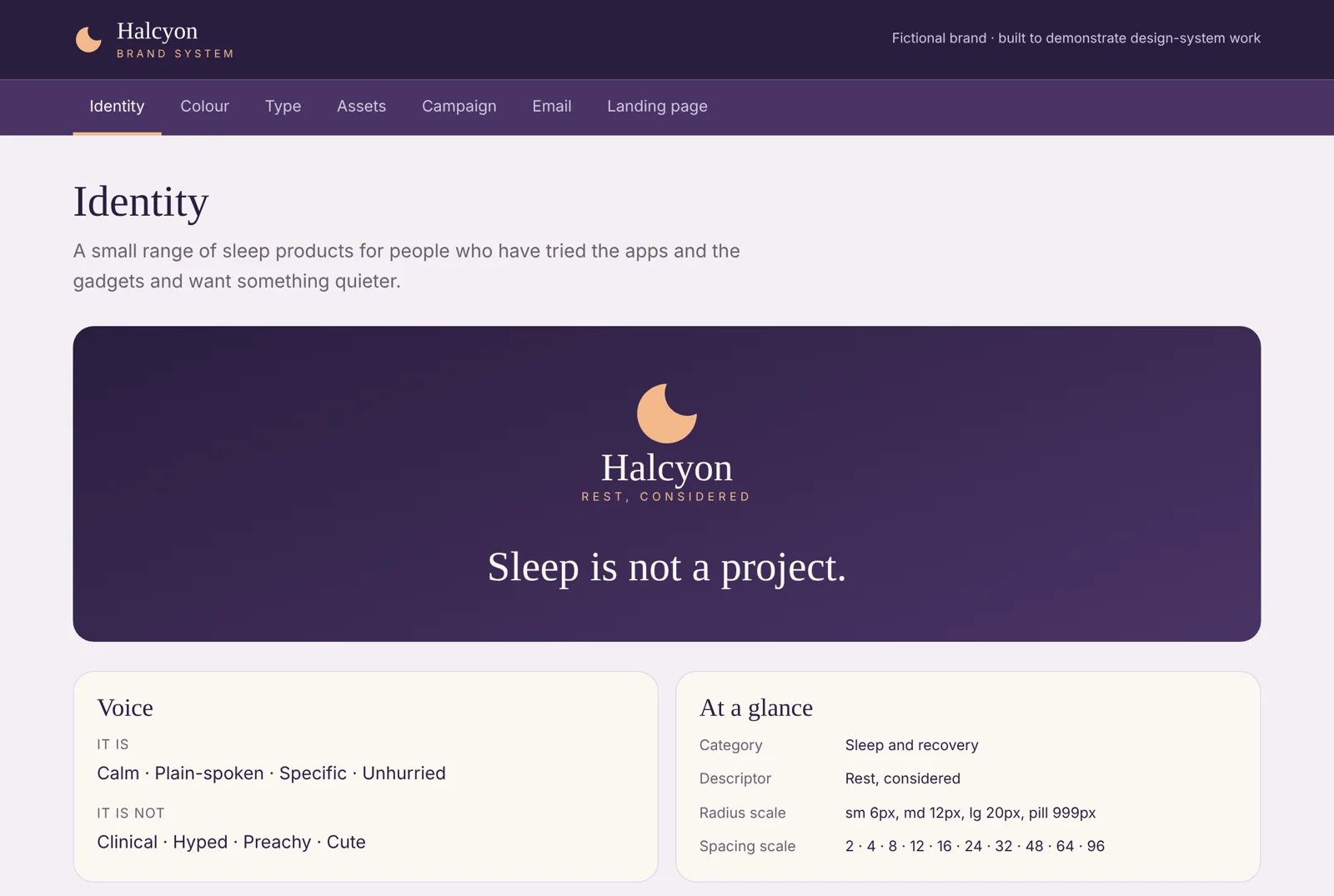
A complete brand system for an invented sleep brand: palette with live WCAG contrast checking, a generated type scale, downloadable SVG lockups and social templates, a table-based HTML email and a landing page.
This is a working demonstration, not a client engagement. The brand and data are fictional.
Background
Halcyon is an invented sleep-and-recovery brand. The system exists to show brand work as something that holds up under checking, rather than a page of swatches.
The challenge
Brand guidelines usually assert accessibility rather than demonstrate it. A contrast ratio typed into a document is a claim; a contrast ratio computed from the palette is a fact that can fail.
Objectives
- Make the accessibility claims computable rather than asserted.
- Generate the type scale from a ratio so it cannot drift out of step.
- Produce assets that download as real files, and email markup that survives real clients.
My role
Sole designer and developer
- Implemented the WCAG 2.2 relative-luminance and contrast formulas, so every documented pairing is measured on render rather than asserted in a document
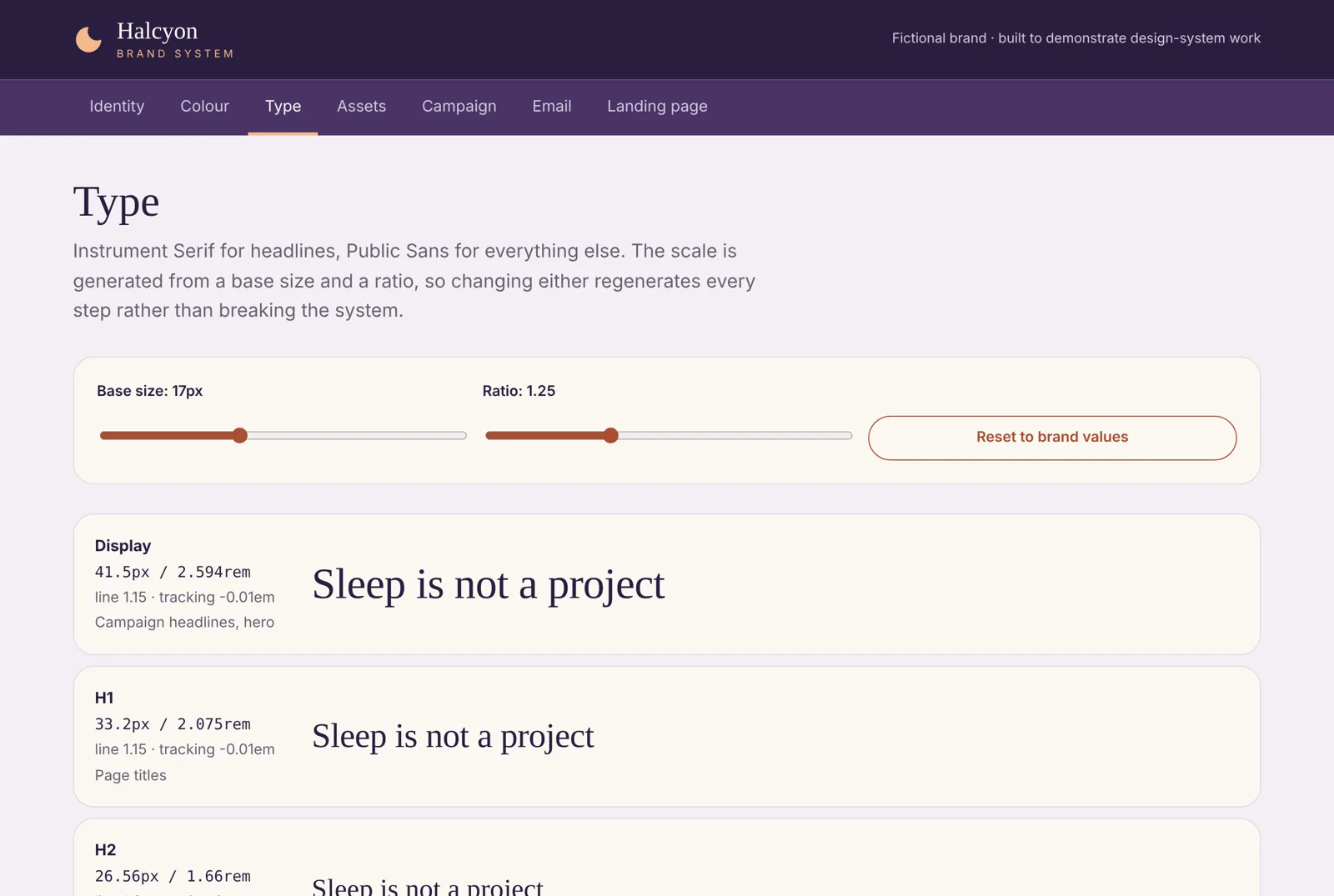
- Built the type scale as a generated modular scale, so changing the base size or ratio regenerates every step
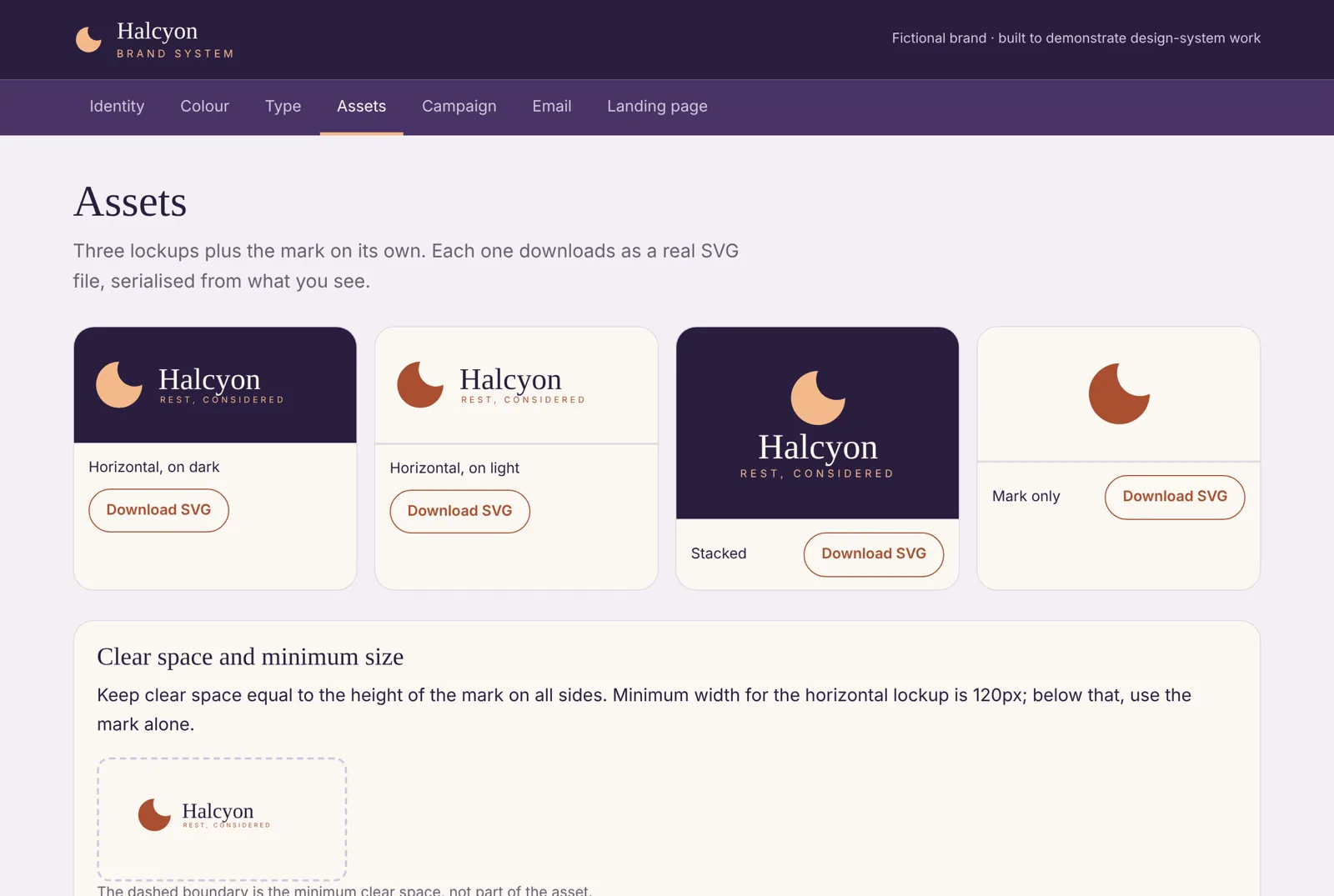
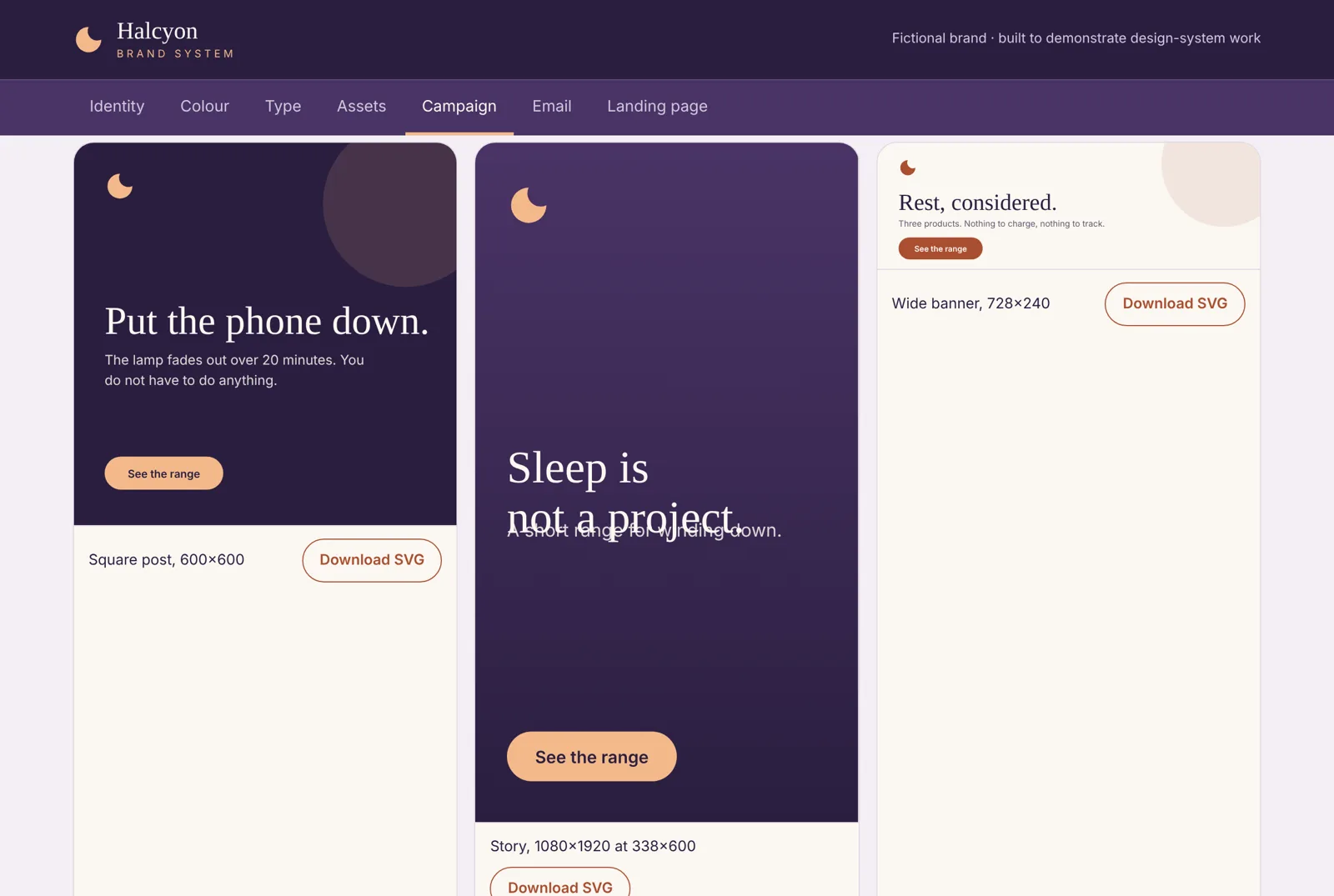
- Drew the mark, three lockups and three social templates as SVG, serialised to real downloadable files from the live DOM
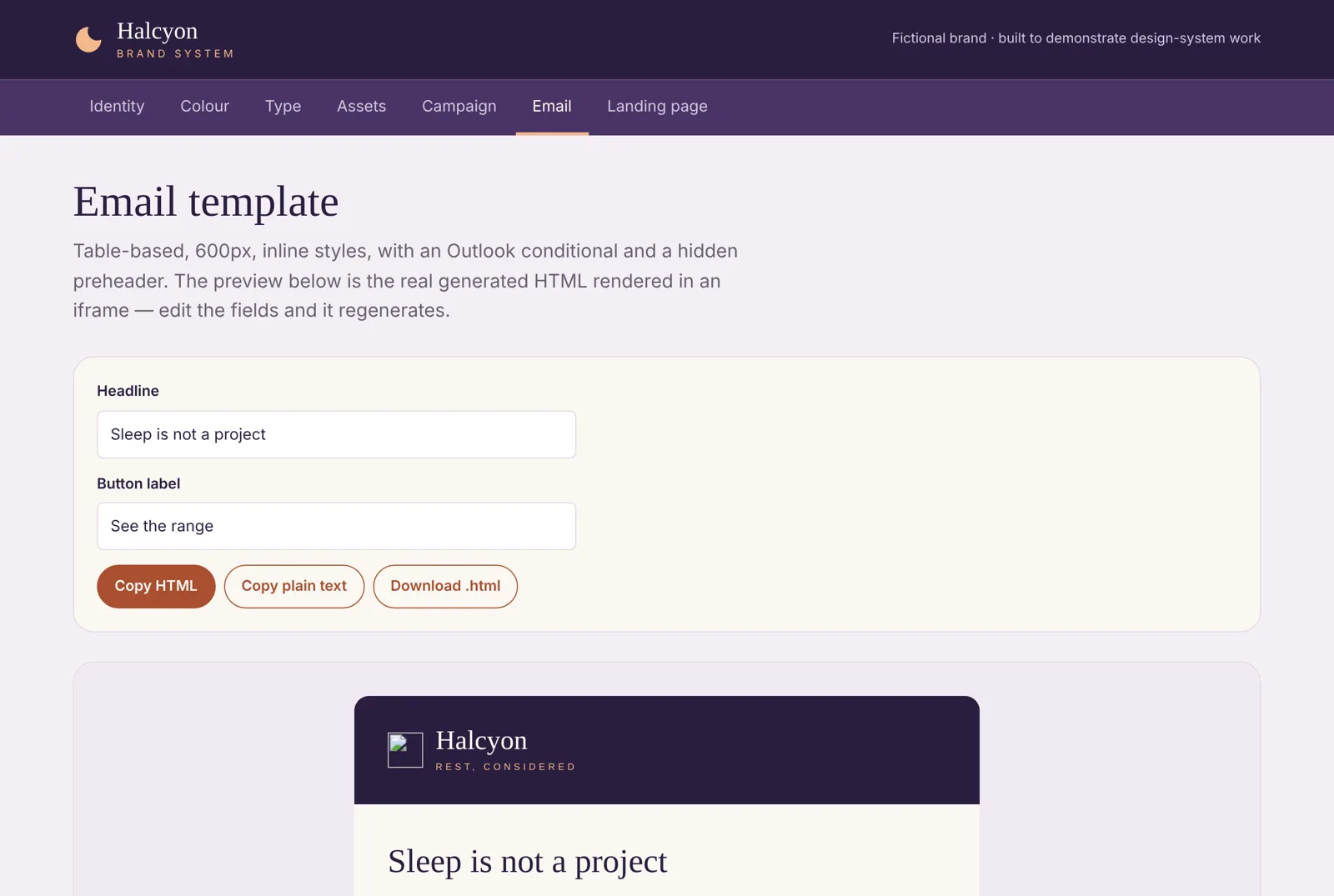
- Wrote a table-based HTML email with inline styles, an Outlook conditional, a hidden preheader and a plain-text alternative
- Wrote 29 unit tests and 21 browser checks
Technical approach
Implement the WCAG formulas, compute every documented pairing on render, and put a test in the suite asserting they all pass, plus a second test asserting that a known-bad pairing fails, so the first test cannot pass vacuously over an empty set.
What is implemented
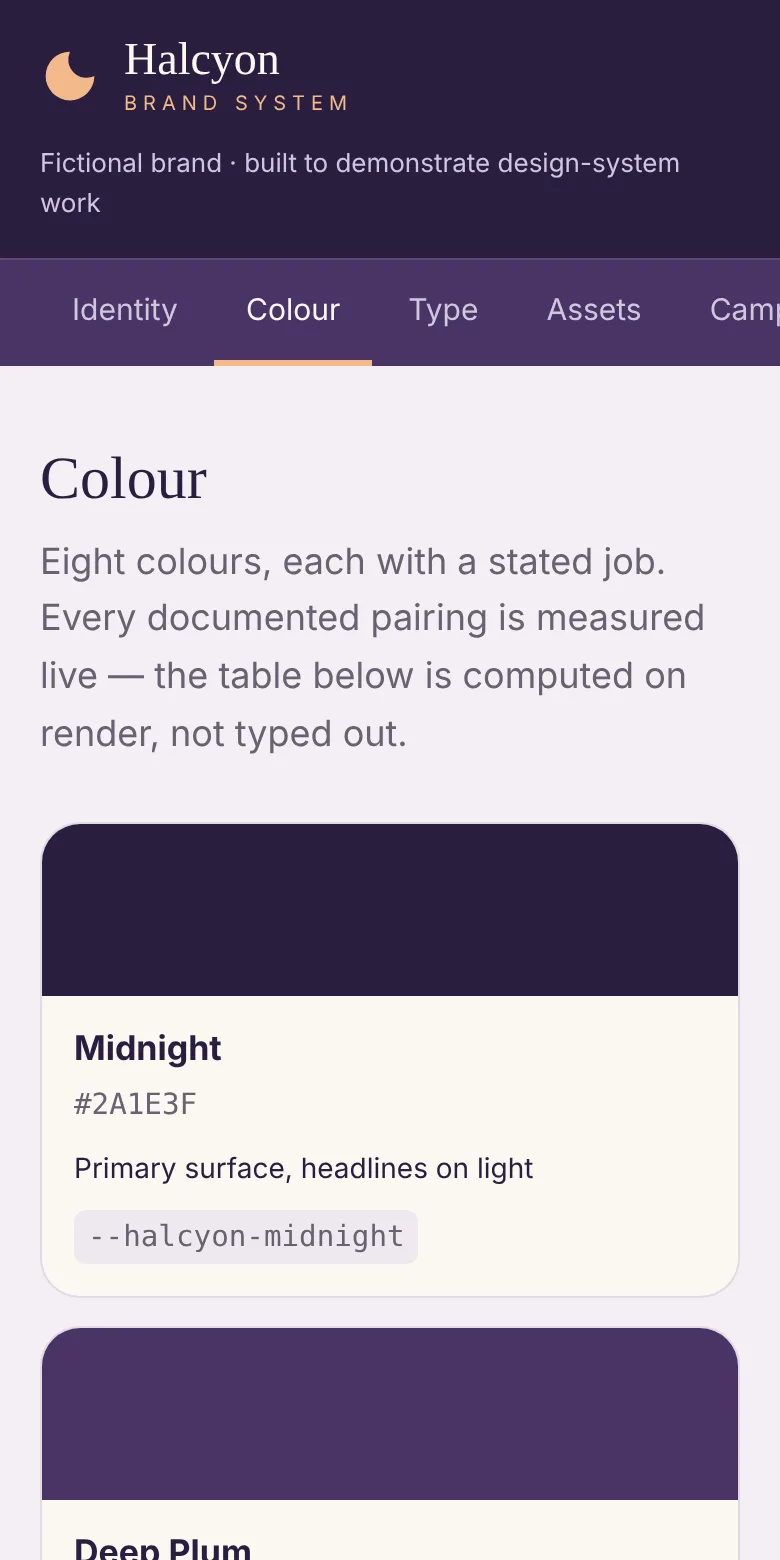
- Palette with every documented pairing measured live against its WCAG threshold
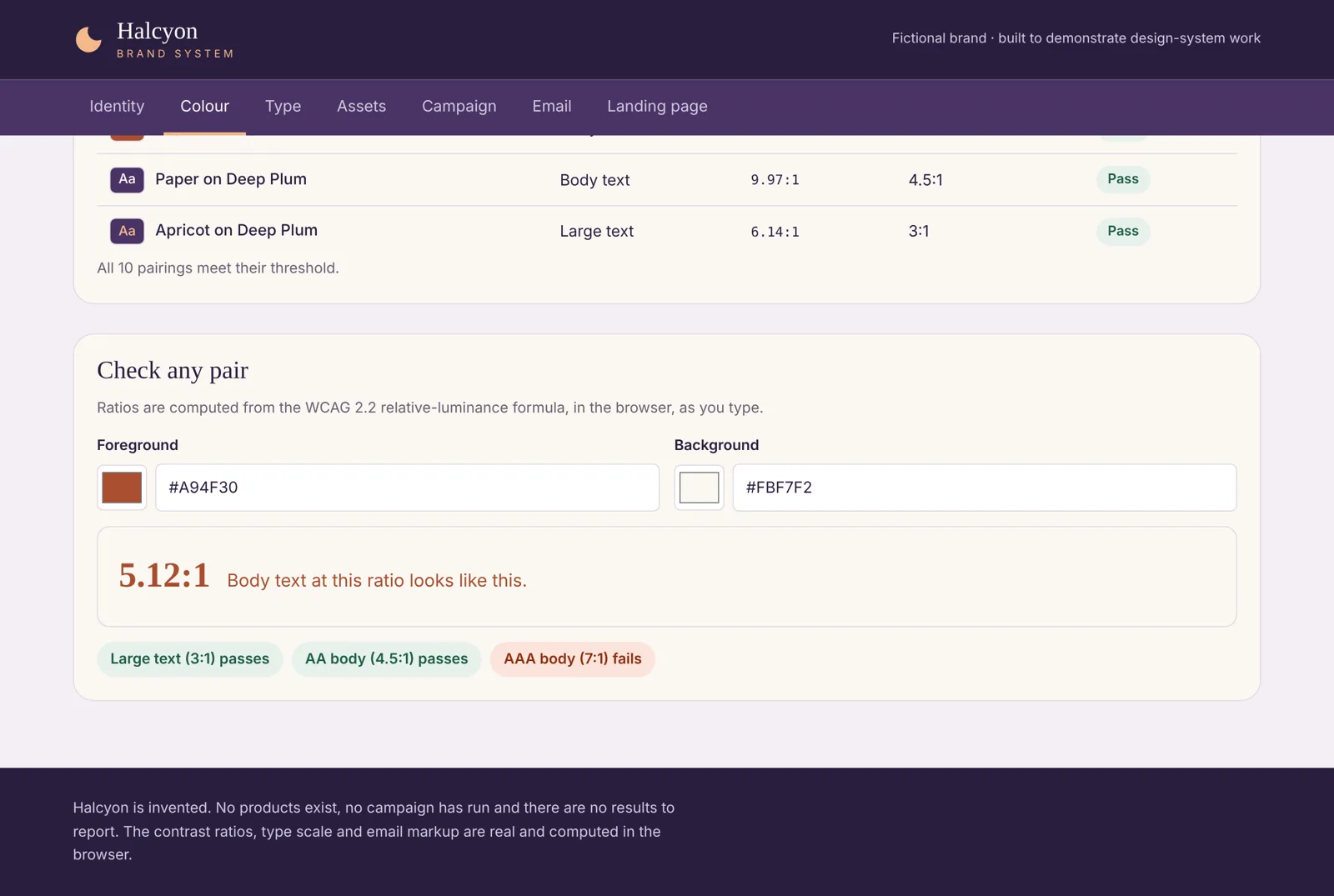
- A contrast checker for any two colours, graded against AA and AAA
- A modular type scale regenerated from an adjustable base size and ratio
- Mark, three lockups and three social templates, each downloading as a real SVG
- A table-based HTML email with a plain-text alternative, previewed in an iframe
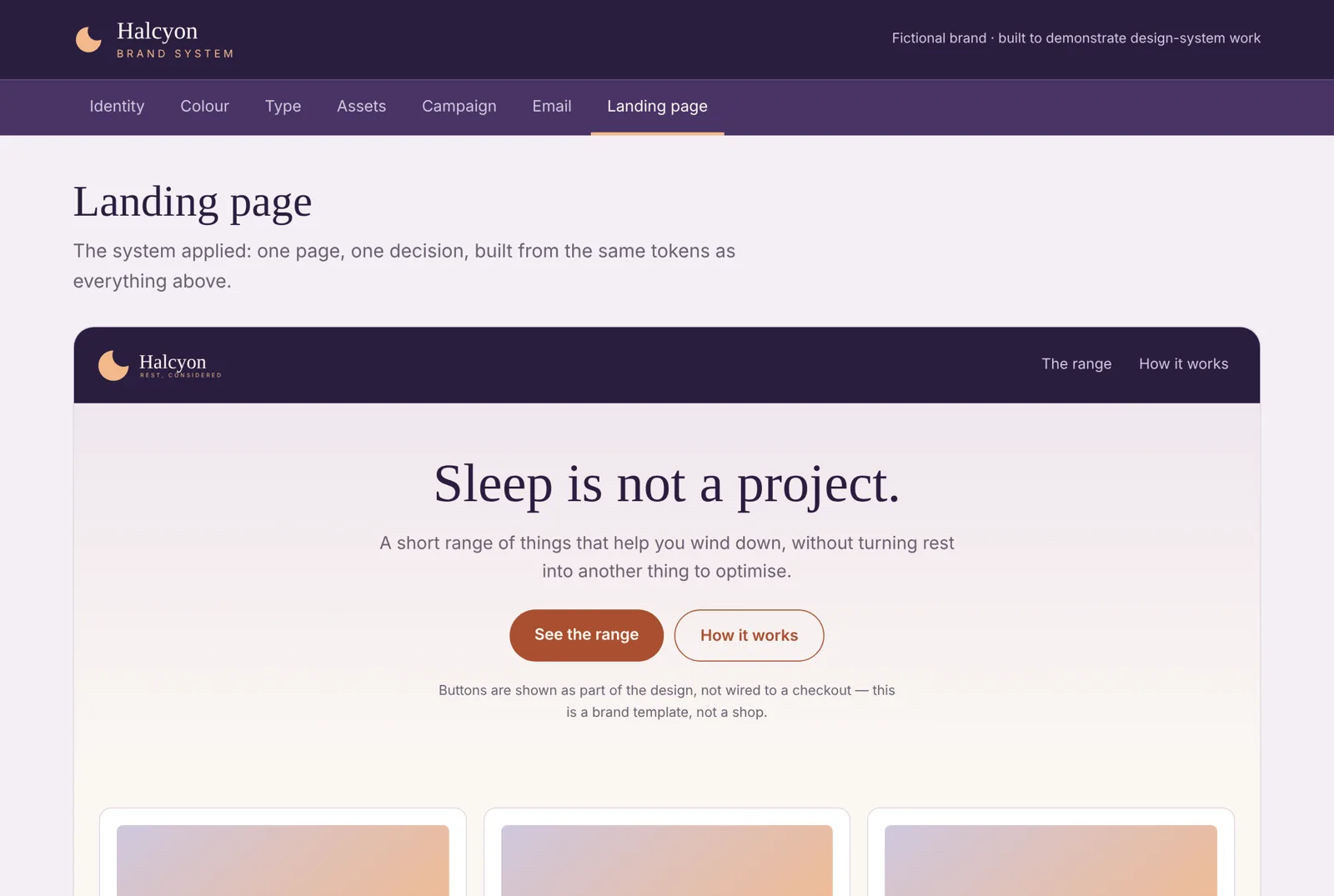
- A landing page built from the same tokens
Process
- Wrote the colour maths and the type scale generator, tested against the WCAG reference values and the ratio.
- Chose the palette, then let the checker judge it, which forced the change described below.
- Drew the mark, lockups and social templates as SVG, with download serialised from the live DOM.
- Wrote the email template to the constraints email clients actually impose, and previewed it by rendering the generated HTML in an iframe.
- Built the landing page from the same tokens.
Engineering and creative decisions
Contrast is computed, not typed in
The WCAG relative-luminance and contrast formulas are implemented, so the table is a measurement that can fail. One test asserts every pairing passes; a second asserts a known-bad pairing fails, so the first cannot pass vacuously.
The checker overruled the palette
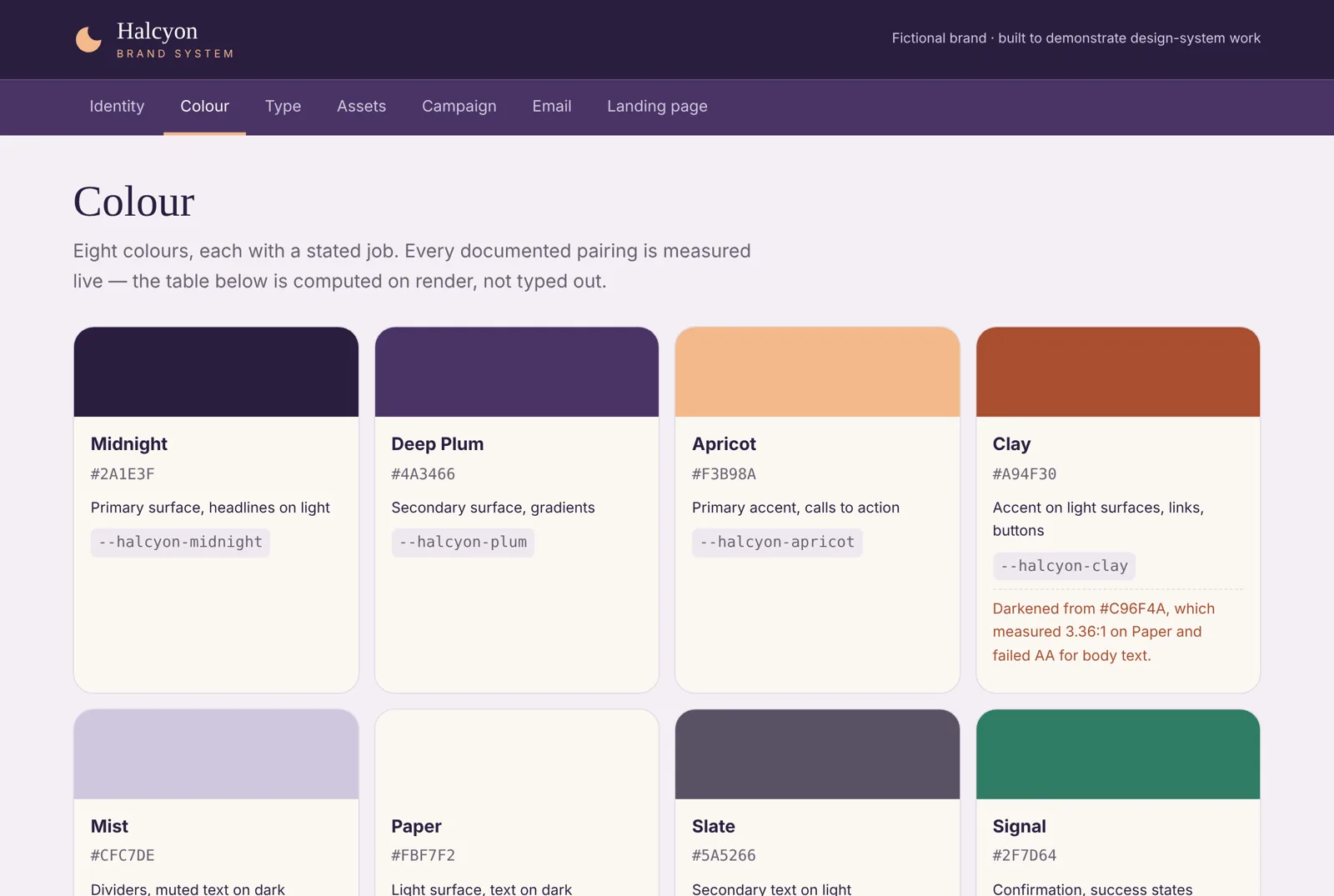
The original Clay accent measured 3.36:1 on Paper, below the 4.5:1 needed for body text. It was darkened to #A94F30 at 5.12:1, and the palette carries a note recording why.
Tables and inline styles for email
Outlook renders mail with the Word engine, so flexbox and grid are unreliable and external stylesheets can be stripped. A 600px table with inline styles is what arrives looking right.
Downloads are serialised from the live DOM
What you see is what the file contains, because the SVG is cloned from the rendered element rather than regenerated from a second source.
What was delivered
A brand system where the accessibility claims are computed in front of you, the type scale is generated rather than listed, and every asset downloads as a real file.
Results
- 29 unit tests and 21 browser checks pass.
- The checker rejected the original Clay accent: #C96F4A measured 3.36:1 on Paper, below the 4.5:1 needed for body text. It was darkened to #A94F30 (5.12:1) and the palette carries a note recording why.
- The browser suite found a real crash: the contrast checker called the parser before validating input, so typing a non-colour unmounted the React tree and left a blank page. Now guarded, with the test kept as a regression check.
- No campaign has run. The campaign section lists what would be measured and says there are no results, and a test asserts the copy contains no results language.
These are tested capabilities of the demonstration, not commercial outcomes.
Technology stack
Visual demonstration
Captured from the running application.